What needs to stay human?
In automation work, trust starts with the boundary: what the system can do, what it must explain, and where a person can take control again.
Product systems · Design leadership · Human-centered AI · Tokyo
The hiring flow that asks too much. The mobile product with too many signals. The team that needs a better way to think together. The AI agent that should not act without a human in charge.
The strongest evidence points to that kind of work: messy systems, consequential decisions, and problems a cleaner screen alone will not fix.
Belief
A product can be faster and still leave people unsure. A model can be powerful and still be impossible to trust. A dashboard can be full of evidence and still not help anyone decide.
I work around the screen as much as on it: what someone needs to understand, what the system is allowed to do, where control stays human, and what happens when the system gets it wrong.
Professional proof
Indeed: employer hiring systems, recruiting automation, mobile strategy, research synthesis, design sprints, and product-learning programs.
SEEK Asia: regional marketplace product/design systems across self-service employer tools, job alerts, candidate flows, responsive communications, staging/deployment, and cross-market delivery.
Apple: service, training, localization, and the human standards behind a high-trust experience.
EF / Englishtown: hands-on web, mobile, learning-product, CMS, and campaign-system craft at regional scale.
Different companies, different tools. I kept running into the same problem: good people carrying complexity the product or team system should have absorbed.
Operating questions
In automation work, trust starts with the boundary: what the system can do, what it must explain, and where a person can take control again.
Signals are cheap to collect and expensive to carry. The useful work is turning them into choices a team can compare.
The best simplification is not just fewer steps. It is moving the right burden away from the person without removing necessary judgment.
How I work
Not a new identity. The method behind the work: make complexity clear enough for a team to align and act.
Name the real decision before the artifact: trust, burden, direction, standards, or control.
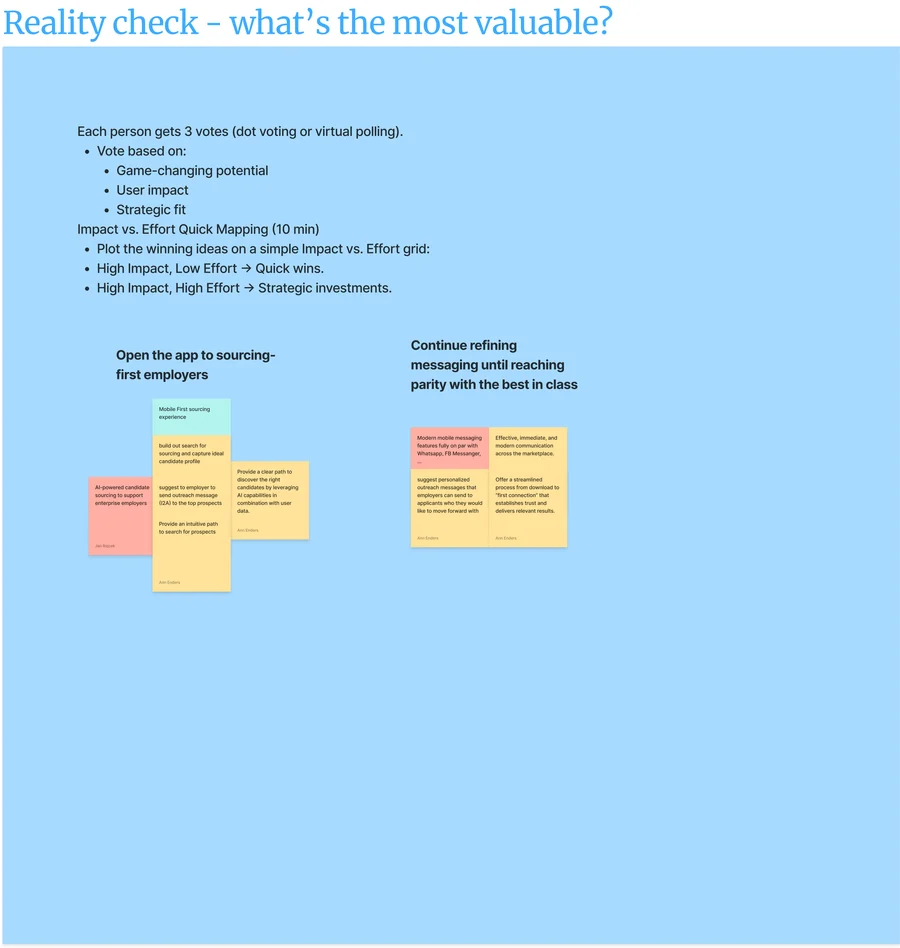
Virtual Recruiter · HabitatTurn feedback, research, metrics, and constraints into options a team can compare.
EMA · Flash FunnelUse maps, roles, rituals, and governance so functions and regions can move together.
Virtual Recruiter · SEEK · Indeed UniversityLeave guides, standards, loops, approvals, or recovery paths that others can keep using.
Indeed University · Apple · HabitatSelected work
Each case has a different job: trust and delegation, product synthesis, or decision-load reduction.
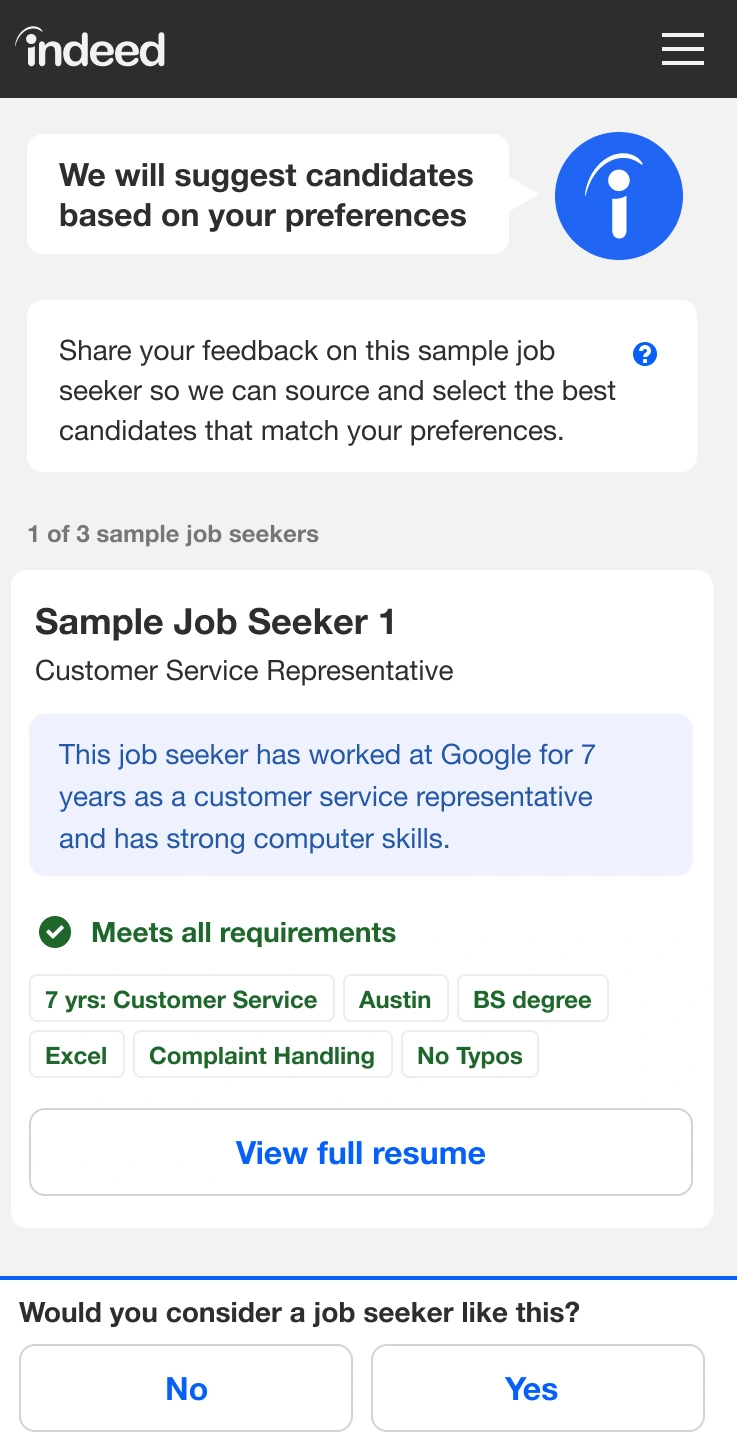
A high-ambiguity recruiting concept shaped into a clearer product/service direction by making explainable delegation, trust boundaries, explanation moments, and MVP decisions visible.
Employer effort → trust contract → delegated product system
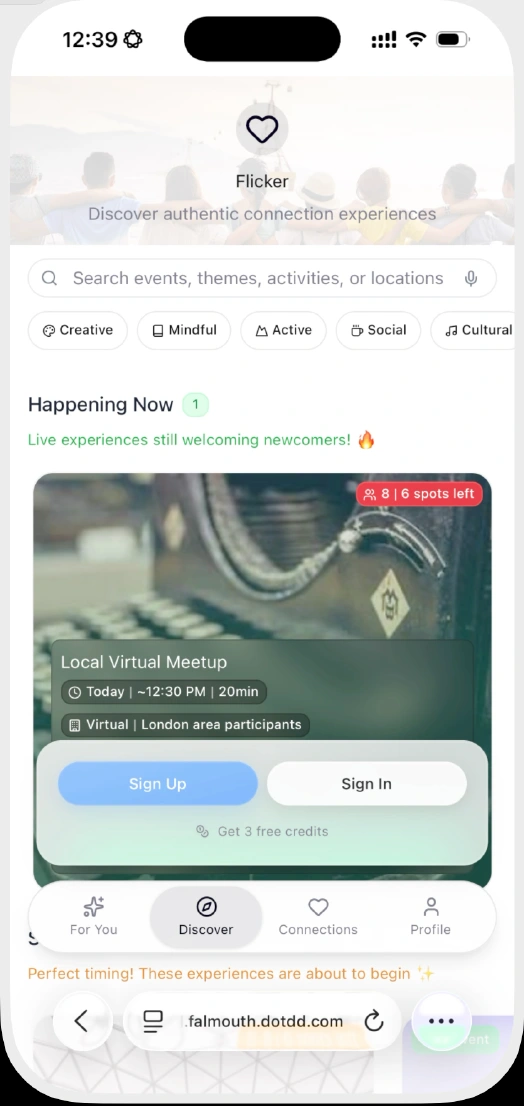
Mobile employer experience can be discussed as a product-intelligence system: app home explains status, interviews get timely support, inclusive foundations stay explicit, and AI assistance waits for clear employer control.
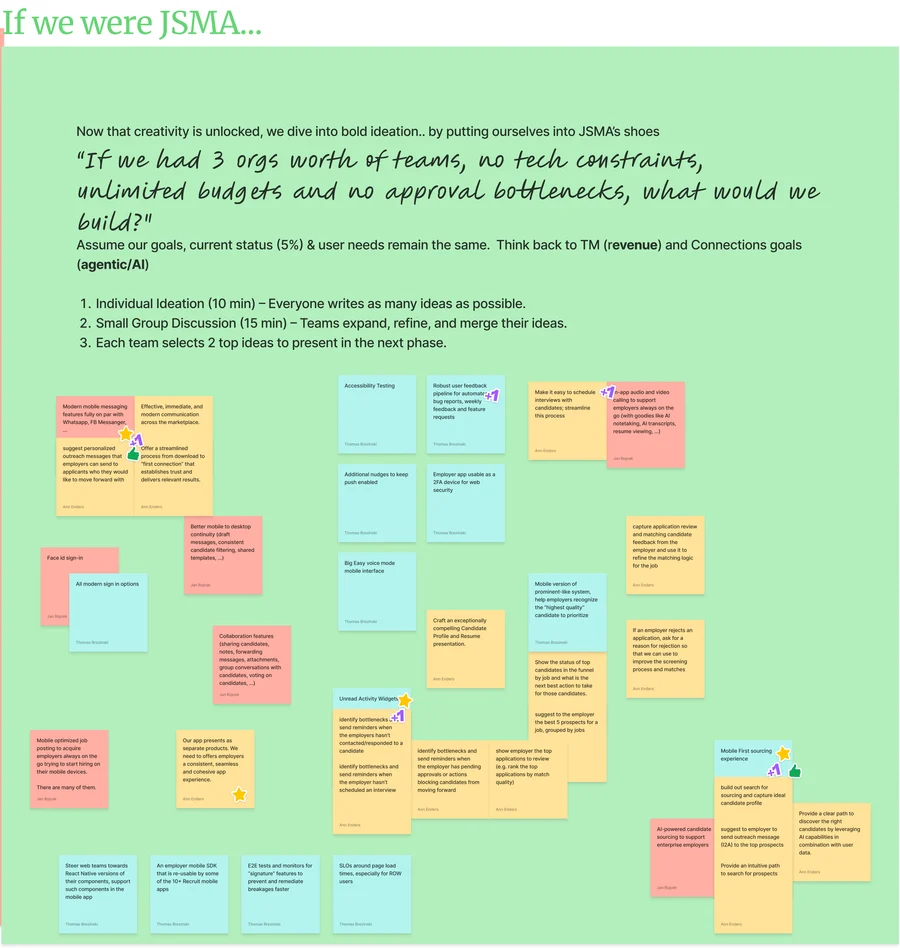
A product intelligence case about synthesizing app feedback, churn, accessibility, rollout, interview workflows, design-system constraints, and AI/Scout opportunities to inform clearer roadmap discussion.
Signals → synthesis → priorities → decision support
A mobile-first job-posting case about reducing decision load: auditing an 11-page, 59-click legacy funnel, sorting each input by responsibility, and protecting employer momentum without making the posting feel careless.
Decision load → responsibility sorting → mobile momentum → behavior signals
Labs
Habitat is my personal operating system and AI lab. It tests a simple rule: agents can help only when memory, tools, approvals, logs, and recovery paths stay visible.
AI operations lab
A local-first AI environment where agents can help, but only inside visible boundaries: memory, tools, approvals, logs, reflections, and recovery paths.
Useful autonomy needs visible interruption, approval, and recovery.
Leadership & capability
That has meant training and service localization at Apple, regional design-system governance at SEEK, UX integration at Indeed University, large cross-functional design sprints, mentoring, facilitation, inclusion leadership, and agent systems where human authority stays visible.
Where next