One brand, used by teams across different markets.
At SEEK Asia, I worked with regional marketing teams and their designers on jobsDB communications. We needed a consistent look, but each market had its own audiences, languages, and campaigns.
The email framework gave teams layouts they could start from and rules they could refer to. It also needed to make the emails easy to read and act on.
Designing the framework and helping teams use it.
I led the structure, visual design, implementation, and rollout. I also developed international guidelines for regional marketing teams and their designers, and provided design direction and reviews through dotted-line reporting.
Alongside this, I managed and mentored my own visual-design team. I was involved both in the design work and in helping other designers apply it.
The framework
Layouts, visual rules, reusable elements, implementation, and guidelines.
The teams
Regional design direction, reviews, rollout, mentoring, and direct team management.
This was a team effort. The published guidelines credit Clara Chu, Didier Ma, Marcel Takagi, and Patrick Liu.
Start with reusable layouts.
Leave room for the story.
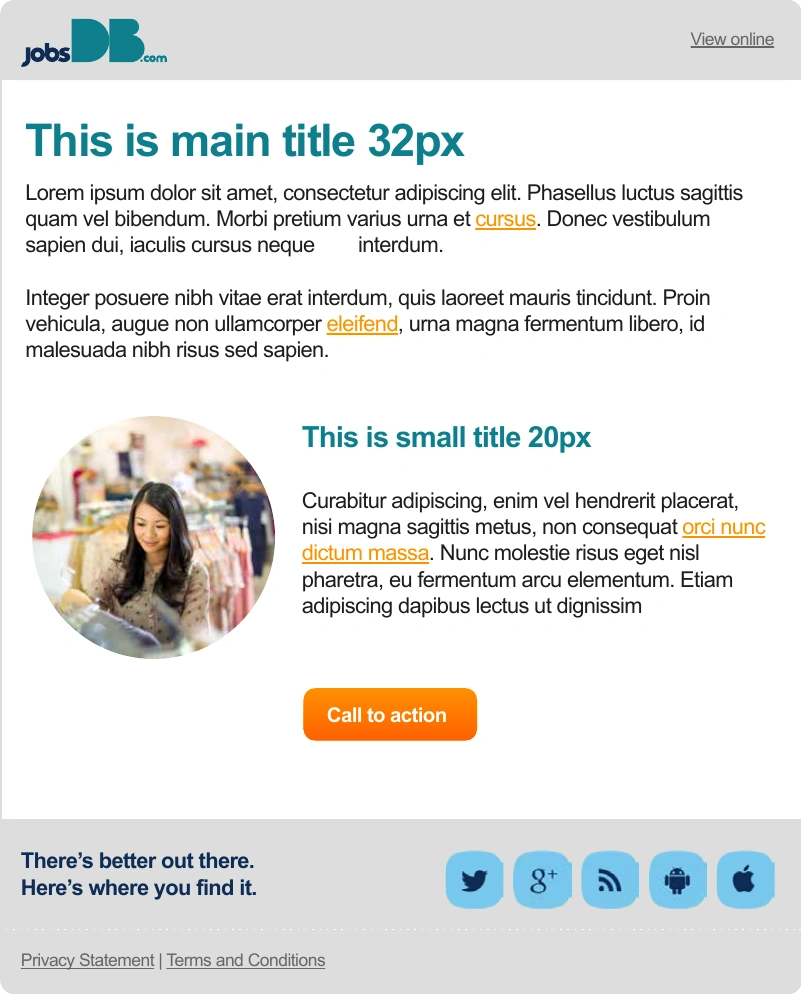
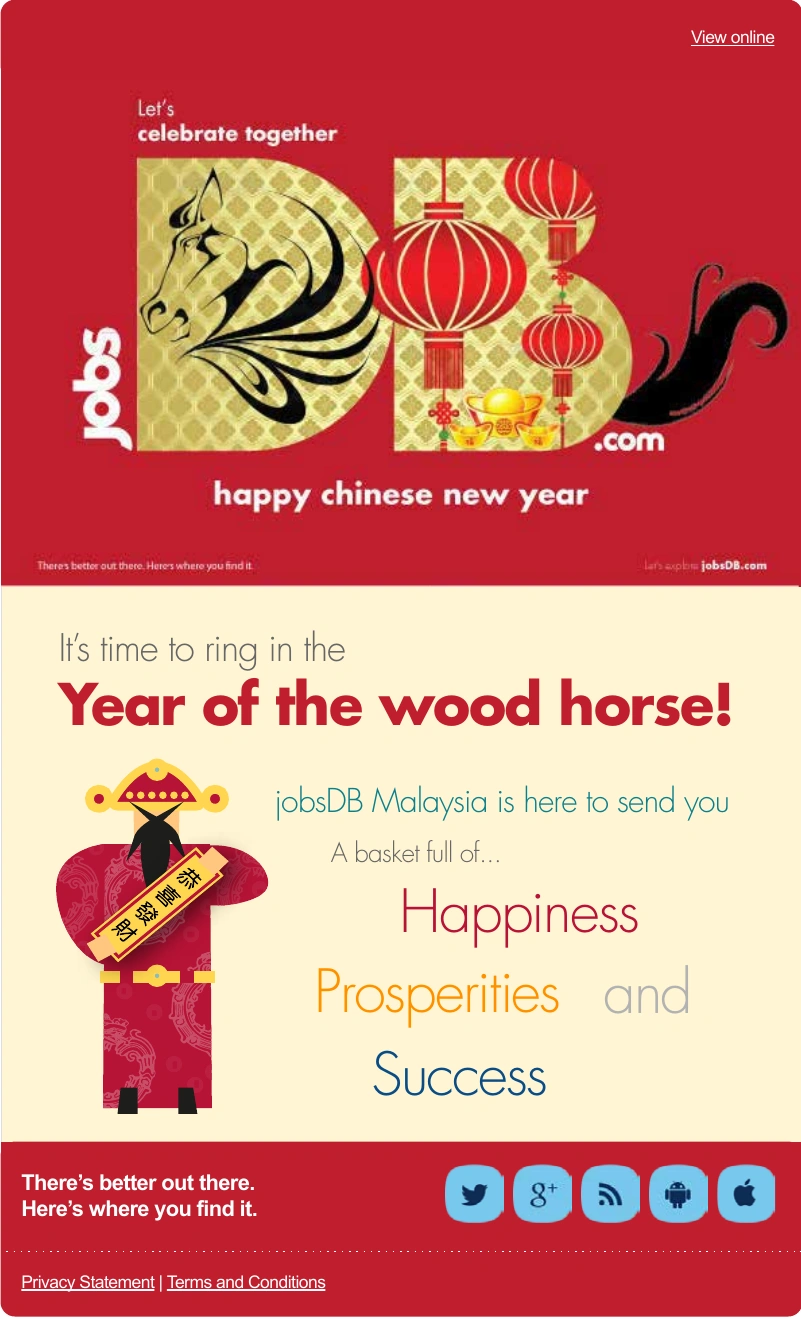
The framework offered two layouts: a single-story email for one main message, and a multi-story email with a featured message and supporting content. Both used a common header, footer, and visual language.
Teams could choose the layout that suited their message without rebuilding the header and footer.
One main message
A featured story, then more
See the original layout structure
Define the reusable parts.
Save teams from starting over.
The guidelines covered colour themes for different audiences, text styles, buttons, headers, and footers. Teams could refer to these when designing an email rather than making each decision again.
Employers & recruiters
Teal / #0d7d8a

Job seekers
Navy / #0e2b54

General & advertisers
Grey / #dddddd

We specified heading and body styles and a consistent colour for calls to action. The header and footer specifications covered logo placement, help text, the tagline, social icons, and footer content.
These examples are from 2014. The fixed widths and type sizes reflect the email system we were working with then.
Keep the layout familiar.
Let each market tell its own story.
Teams could use bilingual help text, local footer information, and the social channels relevant to their market. Festive campaigns could add illustrations to the DB wordmark and carry them through the email.
What stays consistent
The brand, content hierarchy, layout structure, and treatment of key actions.
What teams can adapt
Language, help text, local contact details, social channels, and campaign imagery.
I wanted the guidelines to help a designer working on their next email, not just describe a finished example.
Give teams direction and feedback.
Bring people along.
I provided design direction, reviews, processes, and international guidelines to marketing designers across seven regions. They had a dotted-line reporting relationship with me, separate from my direct team.
Managing and mentoring designers
I managed and mentored two visual designers and two interns, and worked with contractors and agency partners.
Working with regional teams
I reviewed work and supported regional designers on rebranding and campaigns, alongside the shared guidelines.
I needed to be clear about the standards while respecting the judgement of designers who knew their own markets.
The guidelines were only part of the job.
I worked on the layouts and visual details, but also on implementation, rollout, and helping regional teams use the framework.
The part I still find useful is being clear about what needs to stay consistent and what someone can change. That makes a guideline easier to use when the next brief doesn’t look exactly like the example.
Shared layouts and guidance for regional teams.
We delivered reusable email layouts, component specifications, and international guidelines, with clear options for local campaigns.
I don’t have measured results for production time, adoption, email engagement, or conversion.
About the source material
- jobsDB email framework guidelines, first published 28 May 2014; version 2 dated 8 July 2014.
- Published by the jobsDB UX Team. Credited creators: Clara Chu, Didier Ma, Marcel Takagi, and Patrick Liu.
- My résumé: my SEEK Asia role, regional leadership, and the jobsDB/JobStreet library initiative.